
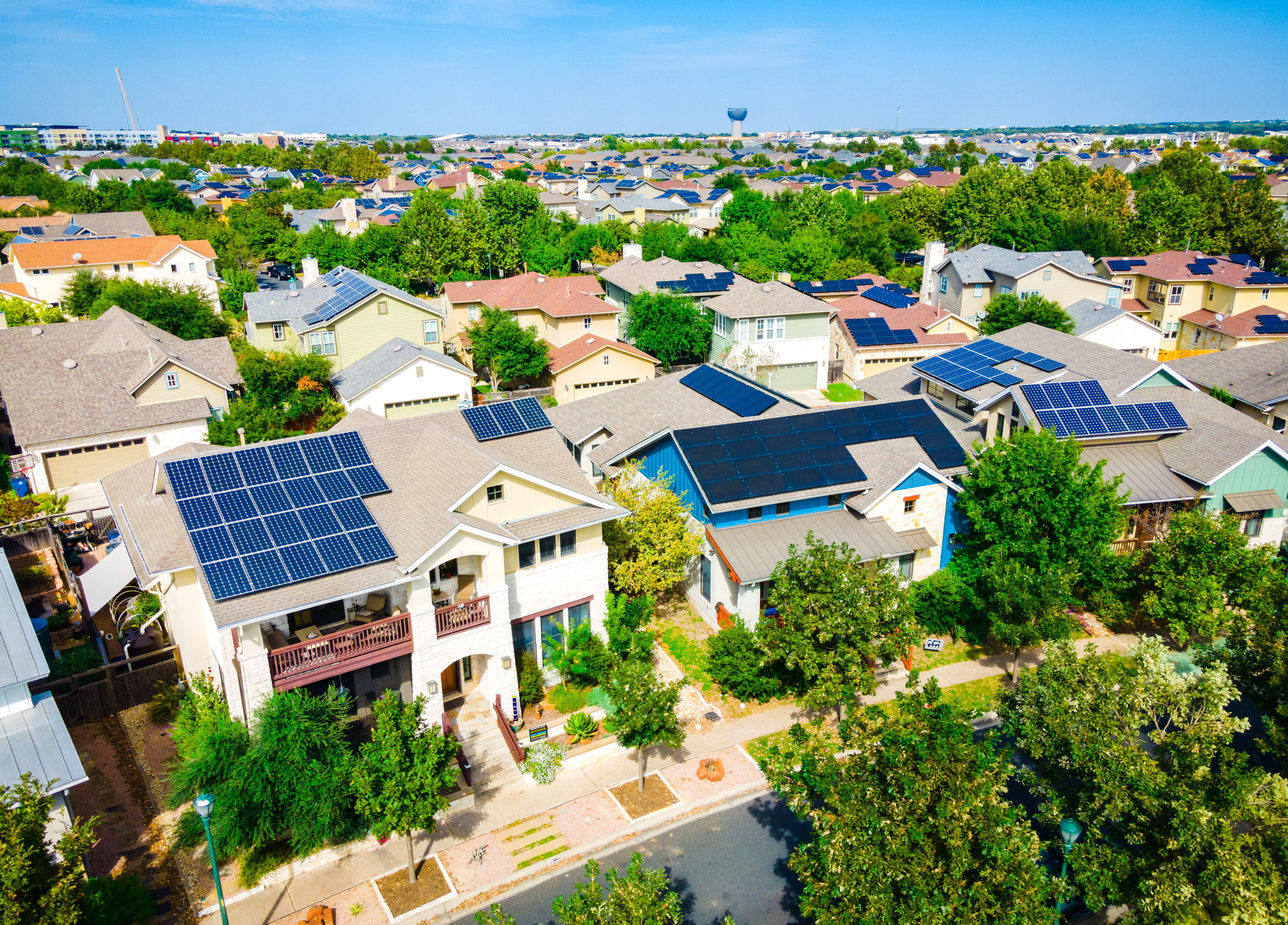
Without the federal tax credit, residential solar energy still pays due to the Perfect Storm. In this new year, our skyrocketing electricity costs – on Long Island, ours are the third highest in the country!! – and reduced solar equipment costs, as well as the retrenching of threatened tariffs make it the “perfect storm” of economic viability and affordability. Without the federal residential tax credit*, it very much still pays to switch to solar energy.
Solar Pays You
A purchased solar energy system is the only home improvement that pays for itself and then pays you! We all know that a residential solar energy pays for itself because it is paid for with the money homeowners already spend on their electric bills, simply diverted to pay off the system in as little as five years. (Or, go ahead and keep paying your utility the rest of your life if you don’t switch to solar!) And, thereafter, solar pays you! For 25+ years, the system produces free electricity. Most warranties extend for 25 years, some for 30, and research studies even show solar panels continuing to produce well beyond then! This means you are still being paid. Keep in mind that as rates go up for non-solar homeowners your free kilowatt hours are worth more, so you are actually paid more year after year after year!
Our High Rates Help
The higher the cost of electricity, the faster the payback period. On Long Island, due to our having no new oil or gas or nuclear power plants (“not in our backyard”) most electricity is purchased from third-party suppliers, a very costly but necessary situation. Our average residential rate on Long Island is an astounding 26¢ per kilowatt hour and rising, only exceeded by some areas of California and the state of Hawaii! After the quick payback period, aside from the monthly interconnection fee of about $15-$18, that same kilowatt hour costs 0¢.
In ten years, electricity costs on average double. That same 26¢ will be 52¢ by then, but not for a homeowner with solar energy. After the initial payback, aside from the monthly interconnection fee of about $15-$18, the cost of that kilowatt hour will be and will remain 0¢. Again, after your quick break-even point, all solar electricity produced is FREE — all that savings free to invest or to immediately use for college, vacation, other home improvements, a new car, whatever!
More Financial Incentives
- New York State tax credit of 25%, capped at $5,000. That’s a real dollar-to-dollar credit, not a less-valuable deduction.
- No sales tax on the purchase of a residential PV system. New York State sales tax as well as Nassau or Suffolk county sales tax exemptions apply.
- No property tax increase. A special real estate property tax exemption is in place in New York State, as well as in Nassau and Suffolk counties.
- Increased home resale value. Homes equipped with purchased solar energy systems sell faster than average, and tend to sell at a premium – oftentimes this premium more than pays back the initial costs of the system – according to several real estate studies as published in the New York Times. Keep in mind that Long Island’s dramatically higher-than-average cost of electricity means much higher resale value, and the attractiveness of low or no electricity costs often expedites the selling process.
And, Did You Realize:
- Day one, you save… due to locked-in rates (your non-solar neighbors still have electricity rate hikes!)
- Day one, you save… with pre-tax dollars – for every $100 you now pay on your electric bill, you need to actually earn $125 before taxes.
- Solar costs have fallen 82% since 2010.
- Panels have become more efficient per square foot & much more attractive and with longer warranties.
Plus You’re Helping Planet Earth
Don’t forget the environmental benefits! Reduce your carbon footprint & help planet Earth! For every 1 kw of your PV system size, about 1,152 lbs. of CO2 per year are eliminated. That correlates to the carbon absorption capability of more than 20 trees per kW. The average 8 kw residential system on Long Island saves 160 trees every year!
*A federal tax credit was also available until 12/31/25 when the administration curtailed it. The impact of this may not be as powerful as some anticipated, as recently skyrocketing electricity rates and lowered equipment costs make residential solar economically viable even without it.
NOTE: Consult your own advisor regarding tax and other financial incentives as they apply to your unique circumstances. Built Well Solar does not provide financial or tax advice.